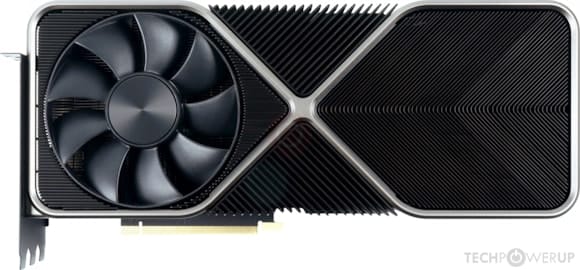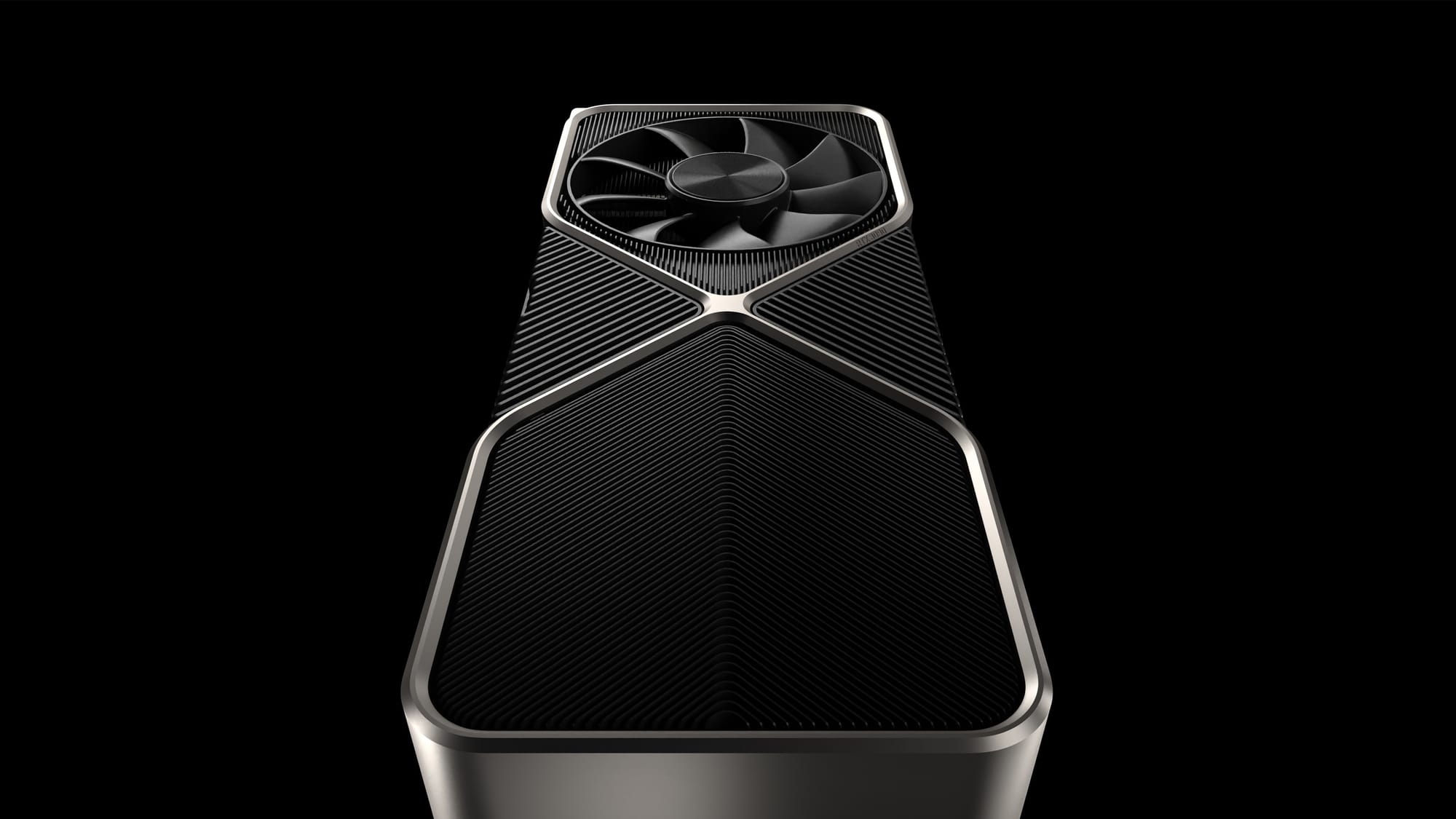
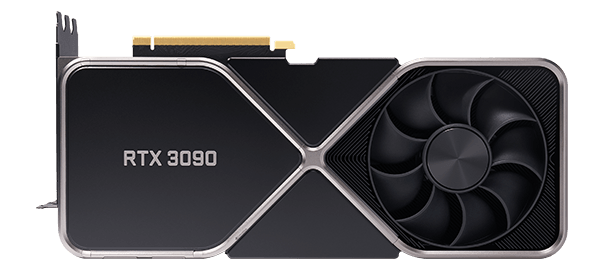
The RTX 3090 launched in September 2020. In GPU years, that's geriatric, two architectures behind, no longer made, no warranty in sight. And yet ask r/LocalLLaMA in 2026 what to buy for local AI on a budget, and the answer is still, with remarkable consistency: a used 3090. This is the story of why a five-year-old card refuses to die, what the people running them actually report, and how to buy one without getting burned.
🧮 Not sure what your budget gets you? Check any model against any hardware in our calculator →
The math that keeps it alive
Local AI has one ruthless purchasing rule, and the 3090 is its biggest beneficiary: for running models, memory capacity and memory bandwidth matter more than compute. Token generation is bandwidth-bound, the card re-reads the model's weights for every token it produces, so what you're really buying is fast memory, not shader cores (we explain the mechanics in our prompt-processing vs generation guide).
On those two numbers, per NVIDIA's own spec sheet, the 3090 brings 24 GB of GDDR6X at 936 GB/s. Now line that up against the rest of the market in 2026. Used 3090 prices have climbed to around $1,100 on relentless AI demand, up sharply from a year ago, but here's what that still buys you:
| Card | VRAM | Bandwidth | Typical price |
|---|---|---|---|
| RTX 3090 (used) | 24 GB | 936 GB/s | ~$1,100 |
| RTX 5070 (new) | 12 GB | 672 GB/s | $549 |
| RTX 4060 Ti 16GB (new) | 16 GB | 288 GB/s | $449 |
| RTX 5080 (new) | 16 GB | 960 GB/s | $999 |
The 5080 matches its bandwidth, with a third less memory (16 GB), and at today's prices it costs about the same, not more. The 4060 Ti has the budget price, at less than a third of the bandwidth. Nothing new gives you 24 GB and 900+ GB/s on NVIDIA's CUDA stack anywhere near this money, a new RX 7900 XTX undercuts it on paper, but only if you'll live on AMD's software (more below). That's the whole secret: NVIDIA hasn't sold this combination cheap since, so the used market does.
In practice, 24 GB means 8–14B models with huge context, 27–32B models at Q4 comfortably, and one card is half of the famous budget path to 70B (more below). Quantization choices are covered in our plain-English quant guide.
Two comparisons put the 3090's price in context: three RTX 3060s versus one RTX 3090, measured on a real $1,500 build, and the RX 9060 XT 16GB as the cheaper card for models that never needed 24GB. Which models those are changes monthly; the latest open models feed tracks every lab's releases.
What owners are actually saying
The sentiment on r/LocalLLaMA is strikingly stable. A builder who specced a dual-3090 workstation for actual daily ML work, u/BenniB99, put it plainly:
"My goal was to put together a dual 3090 build, as these cards still provide the best bang for the buck in my eyes."
, u/BenniB99, r/LocalLLaMA
A 4×3090 owner who assembled 96 GB of VRAM entirely from the used market agrees, and keeps buying:
"All bought from used market, in total $4,300, and I got 96 GB of VRAM in total… I think the price of 3090s right now is a great deal to build a local AI workstation."
, u/monoidconcat, r/LocalLLaMA
And on real-world pricing, from the same dual-3090 thread:
"I see 3090s for 600–800€ (mostly above 700€) on eBay. If you bide your time a bit and check your saved searches regularly you can get lucky quite often. These offers are usually gone pretty fast though, so you need to be quick."
, u/BenniB99, r/LocalLLaMA
Worth noting for balance: the community also polices its own hype. When a writeup claimed 85 tok/s from a 27B model on a single 3090, the top reply was a correction, and it doubles as the most useful performance summary you'll get:
"85 TPS on a single 3090 for 27B with 125K context would be well above what most people report, most single-3090 runs at 27B are in the 40–60 TPS range at shorter context."
, u/jimmytoan, r/LocalLLaMA
Take that as your calibration: roughly 40–60 tok/s on a 27B at Q4, faster on smaller models, generation comfortably above reading speed, on a card costing less than some CPU coolers' worth of new-GPU markup.
The dual-3090 rig: the people's 70B machine
One 3090 is the value play; two is the classic. Pair them (~$2,200 used) and you have 48 GB of pooled VRAM, enough for a dense 70B at Q4, which needs roughly 46 GB with modest context (the math is in our calculator, pre-filled for 70B, note it correctly shows as a tight fit). llama.cpp splits the model across both cards out of the box, and owners typically report 70B generation in the low-to-mid teens of tokens per second, usable, real, and for years the cheapest fast path to 70B at home.
The real costs: you need a PSU in the 1,200 W class, a case and motherboard that physically accept two ~3-slot cards, a tolerance for 700 W of space heater under your desk, and double the used-market risk. It's also fair to say the MoE era is shifting this calculus: a ~$1,900 Strix Halo box holds bigger (sparse) models more quietly, trading away the dual-rig's raw dense-model speed. That trade-off is exactly what our unified-memory coverage is about.
How not to get burned buying used
Every 3090 on eBay has a history, many mined, some lived in dusty cases, a few are pristine. The community's survival guide, distilled:
- Stress-test inside the return window. u/BenniB99's approach after buying his pair: "performed inference continuously on them with Gemma 3 27B for around ten minutes and ran a RL training workload", sustained load, watching temperatures, before the return window closed. Do the same (any sustained LLM inference plus a VRAM test works).
- Watch VRAM temperatures specifically. The 3090's GDDR6X runs hot and its thermal pads age; memory-junction temps sustained above ~100 °C mean a repad is in your future (a ~$30 DIY job, but know before you buy).
- Buy with protection. eBay's money-back guarantee beats marketplace cash deals unless the local price is dramatically better. Mining history matters less than the seller letting you verify.
- Don't overpay. Patience is the discount: prices swing widely, and saved-search alerts catch the under-$1,000 listings that "are usually gone pretty fast."
Who should buy something else
- You need a warranty. The RX 7900 XTX (~$849 new) matches the 3090's 24 GB / ~960 GB/s with retail protection, if you're comfortable on AMD's software stack.
- You want quiet, low-power, plug-and-play. The RTX 4060 Ti 16GB is slow but new, cool and warrantied, fine for 14B-class duty.
- You want big MoE models, not dense speed. A 128 GB unified-memory box (Strix Halo, ~$1,900) holds models no 3090 pair can; see our Unified-Memory AI guides.
- You process huge prompts all day. Prefill leans on compute, where a used RTX 4090 (~$2,300) pulls clearly ahead of the 3090.
Bottom line
The used RTX 3090 is what value looks like when a market stops making the thing people actually need: cheap, fast memory in quantity. It's old, hot, warrantyless, and still the most rational first GPU in local AI, and the most rational second one, too. Buy from a protected marketplace, stress-test it within the return window, and it will likely outlive your interest in whatever model you bought it for.
Sources & how we researched this
We have not tested these cards first-hand, this aggregates real owner reports from r/LocalLLaMA, linked at every quote so you can verify: the dual-3090 workstation build (value, pricing, used-card testing), the 4×3090 workstation (sustained used-market buying), and the community correction of an inflated single-3090 benchmark (realistic 40–60 tok/s on 27B), which we deliberately cite instead of the inflated claim. Specifications are from NVIDIA's official product page; multi-GPU behavior from the llama.cpp project documentation. Prices are typical used-market figures, checked June 12, 2026, they move; treat them as directional.