The Raspberry Pi 5, now in a 16 GB version, is the most capable Pi ever, and 2026 brought a genuinely surprising twist: people are running real AI models on it. With the right (MoE) models, a $120 board can hold a 30B-parameter LLM in memory and answer you, locally, drawing a few watts. That's wild. It's also slow, and easy to over-hype. Here's the no-hype buyer's guide to the 16 GB Pi 5 for self-hosting and edge AI.
What it is
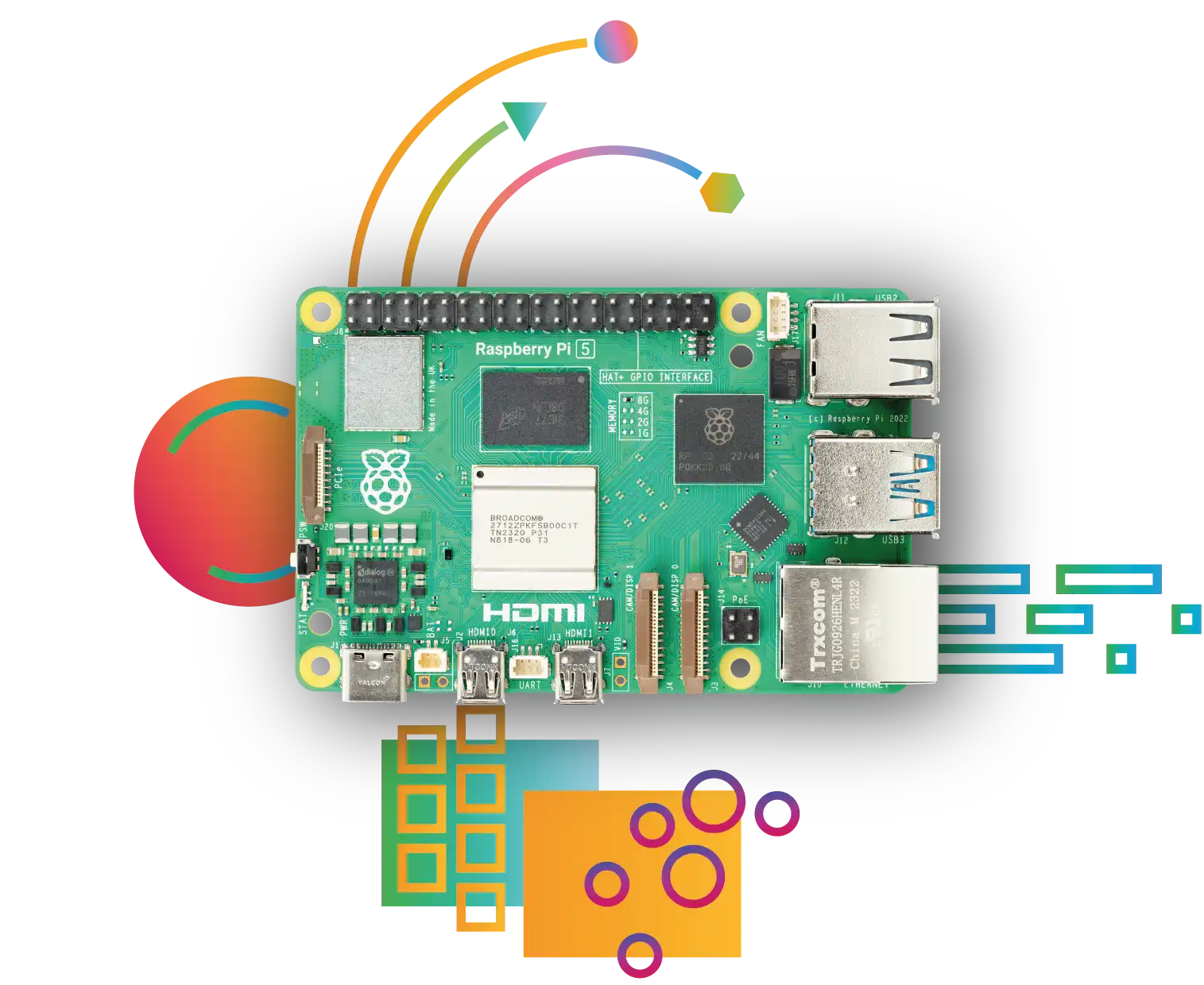
A credit-card-sized single-board computer with a quad-core Arm Cortex-A76 (BCM2712), now with up to 16 GB of RAM, a PCIe 2.0 lane (NVMe via a HAT), dual 4K HDMI, USB 3, and gigabit Ethernet, all sipping power. The Raspberry Pi 5 16GB isn't fast in absolute terms, but its value, efficiency, and enormous software/accessory ecosystem are unmatched.
Who it's for
Tinkerers, self-hosters, and homelabbers who want a cheap, low-power, endlessly flexible machine. Owners run astonishing amounts on one:
"I've been quietly building out my home lab on my Pi 5 16GB. Honestly, I'm really impressed with everything the Raspberry Pi can do.", u/pdgeorge, r/raspberry_pi
The 16 GB model specifically enables the new party trick: local AI. Developers have run Qwen3.5-class MoE models on it, as one put it, the "active-parameters trick turned MoE from a datacenter architecture into an embedded one," and unlike a phone, "it works great on a Pi where thermals and power aren't the limiter" (u/jslominski).
Key specs & the real tradeoffs
Be clear-eyed about the AI part: it runs models, but slowly. Real-world tests put a 30B MoE model at roughly 7–8 tokens per second, and dense models are far slower, fine for tinkering, agents, and learning, not for snappy real-time chat. For faster edge inference you'll want an accelerator like the Raspberry Pi AI HAT+. Also budget beyond the board: a Pi 5 really wants active cooling, a 27 W USB-C PSU, and ideally an NVMe HAT, the "$120 computer" is more like $180–220 once it's usable.
How it compares
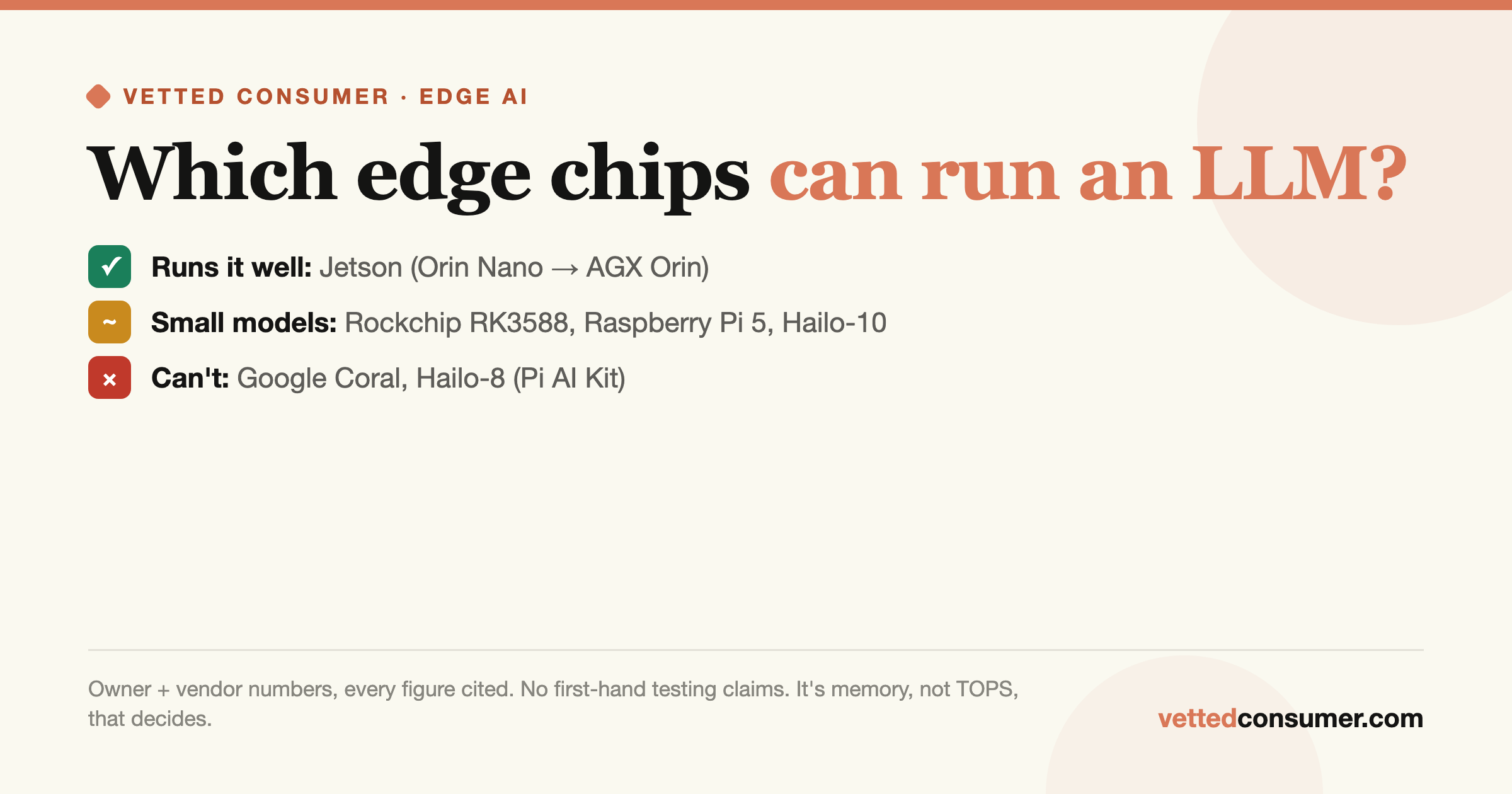
For faster edge AI, NVIDIA's Jetson Orin Nano has real GPU acceleration and CUDA, better raw ML performance, but pricier, hotter, and with a steeper learning curve. For serious local LLMs, a unified-memory mini PC is the right tool. The Pi's edge isn't speed, it's price, power draw, community, and the sheer number of things it can do beyond AI (NAS, Pi-hole, retro gaming, home automation, web hosting).
Specs and real out-the-door price
The board is the cheap part. To make a Pi 5 stable under an all-night inference load you also want the official active cooler and a power supply that can deliver 5A, so price the kit, not the SKU. Prices below are from the official store and listings we checked in June 2026; the 16GB board has moved sharply since launch.
| Spec | Raspberry Pi 5 (16GB) |
|---|---|
| SoC | Broadcom BCM2712, quad-core Arm Cortex-A76 at 2.4 GHz |
| Memory | 16 GB LPDDR4X (single Micron package, eight 16Gbit die) |
| GPU | VideoCore VII (no usable LLM acceleration) |
| Expansion | PCIe 2.0 x1 (NVMe via HAT), 2x USB 3.0, 2x USB 2.0, Gigabit Ethernet |
| Power | Official 27W USB-C supply, 5.1V / 5A |
| Board price | $120 at launch, $205 by March 2026 (Tom's Hardware), $305 on the official store as of June 2026 |
| Active cooler | about $13.50 (Adafruit) |
Note the price story: the RAM and AI-component shortage roughly doubled the 16GB board over a few months, so the old "$120 computer" framing no longer holds. Add a cooler, the 27W supply, and an NVMe drive and a usable AI Pi now lands well above its sticker.
Can it run local AI?
Yes, within limits, and the limit is memory, not just the CPU. With 16 GB of LPDDR4X you have enough room to hold a mid-size model resident, but decode speed on a Pi is bound by memory bandwidth, not core count, which is why a small dense model can feel slower than a much larger Mixture-of-Experts model. MoE only reads its active experts each token, so it touches far less memory per step. That is the whole reason a 30B-class MoE is the sweet spot here and a 13B dense model often is not. We explain the mechanism in the active-parameters guide and the bandwidth-vs-compute split in prompt processing vs generation.
What realistically fits 16 GB at a 4-bit quant (these are estimated ranges, derived from the device's memory size and LPDDR4X bandwidth, not benchmarked here; confirm against your own runtime):
- Best fit: a 30B-class MoE at Q4 (single-digit tokens per second, usable for agents and background tasks, not snappy chat). This matches the 7 to 8 tokens-per-second figure owners report in the section above.
- Workable but slow: 7B to 8B dense models at Q4. They fit easily, but expect noticeably slower generation than the MoE because every parameter is read each token.
- Skip on a bare Pi: dense 13B and up for interactive use, long-context summarization of big documents, and anything where you need fast prompt processing. The CPU prefill is the bottleneck, so prompts feel laggy before the first token even appears.
Use Can I Run It? to check a specific model against 16 GB, and the Quant Picker to size the quant so it stays in RAM with headroom for context.
Which config to buy for local AI
For AI specifically, the 16 GB board is the only variant worth considering; 8 GB caps you out of the MoE models that make the Pi interesting. Pair it with the official active cooler (sustained inference will thermal-throttle a bare board), the 27W supply so USB and NVMe stay stable, and a small NVMe SSD via a PCIe HAT so model files load off fast storage rather than a microSD card. Run models through llama.cpp or Ollama, keep them at a 4-bit quant, and treat the Pi as an always-on, low-watt inference node rather than a desktop replacement.
Sources for the specs above
- Raspberry Pi 5 official specifications
- Official 16GB Raspberry Pi 5 launch announcement ($120, BCM2712 D0, Micron LPDDR4X)
- Raspberry Pi 5 buy page (current $305 listing for 16GB)
- Official Raspberry Pi 27W USB-C power supply (5.1V/5A)
- Tom's Hardware: Pi 5 16GB price rises to $205 amid AI/RAM shortage
- Official Raspberry Pi 5 Active Cooler (Adafruit, ~$13.50)
The verdict
The Raspberry Pi 5 16GB is the best all-round tinkerer's computer money can buy, and the extra RAM makes it a legitimately fun local-AI and self-hosting platform, as long as you accept single-digit token speeds and budget for cooling, power, and storage. Buy it for the ecosystem and flexibility; if you need fast AI specifically, add an AI HAT+ or step up to a Jetson.
Not sure which MoE model fits 16GB at a usable speed? Check it against our Can I Run It? tool and size the quant with the Quant Picker before you buy.